
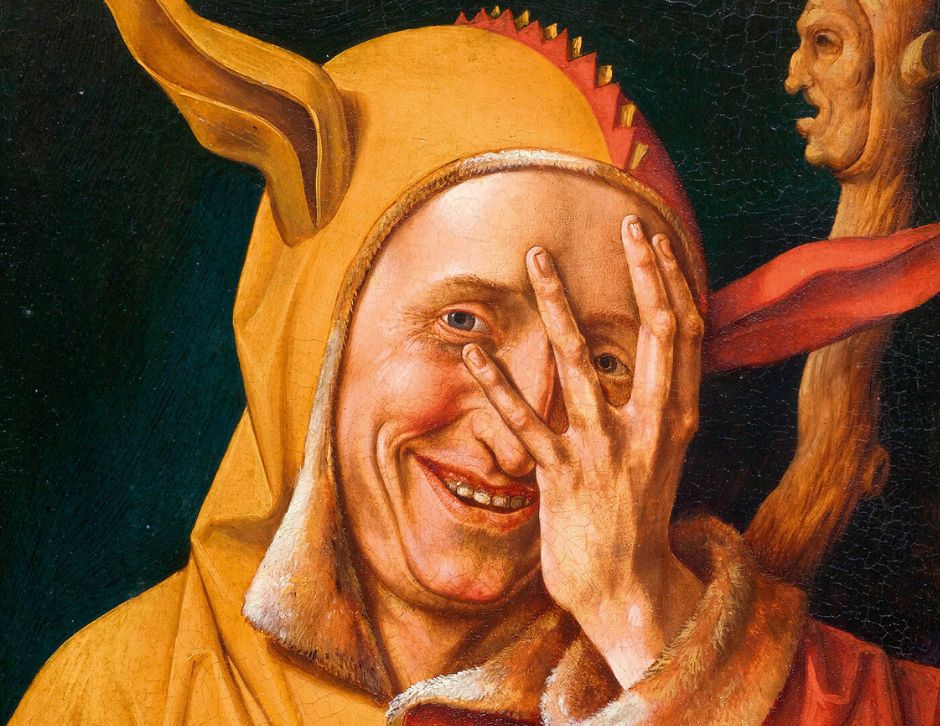
The subjects of the Middle Ages and Renaissance are subversive tools for present times, suggesting not only the powerful artistry but amplifying the cultural practices for the generation of the present to learn about. From these images, we get to digest extensive information about Western society, often letting us relate to modern times and see the world with uncommon insight. To continue this intellect, the French Icon Louvre presents Figures of the Madman, From the Middle Ages to the Romantics, from October 16, 2024 – February 3, 2025.
The literature of Western art has references to the faces of fools, commonly called Madman. Highly present in Illuminated manuscripts, printed books and engravings, tapestries, paintings, sculptures, and precious or everyday objects between the Middle Ages and the Renaissance, these subjects are questioned for their meaning and why they interrupted us with their presence. Though fascinating and challenging the depths of artistry during different periods, it is crucial to also learn the reason for their disappearance from art when reason and enlightenment triumphed and the resurgence at the end of the 18th century and during the 19th century.
Initially, Madman gripped the soil of religious thoughts as “foolish” rejecting God. The deeply religious Middle Ages would let the artists draw these figures for the illuminations adoring the psalters, especially in the initial “D” of Psalm 52. In it, the sentence starts with,
“Dixit insipiens in corde suo: non est Deus.” (“The fool said in his heart: there is no God”)

The artist would then add gravity to the figures of the fools by indicating their lack of clothes and a rich appeal, a characteristic that evolved further with generations and regions. For instance, a complex illustration of King Solomon and his fool Marcolf or a work that depicts fools with a feathered hat can be found in Italy.
The importance of other centuries should be discussed as well, knowing they become essential sources of understanding the imagery. Around 1500, the figure became extensive in European society and culture because of Brant’s written literature that was translated into various European languages and distributed across regions. Following this, Erasmus published Moriae Encomium and it became even more popular as the critics regarded his writing as the thesis of the Protestant reform. The fool soon became a conflict of images between the Protestants and the Catholics, leading to further myths.


Throughout the 17th and 18th centuries, the appearance of fools declined and perhaps changed too. While European art had fewer representations of these figures, the court madman faded too. The notions embodied by multiple figures of the madman, such as irony, farce, or disarray, survived through new silhouettes. A reissue of Cerascus’ work popularized the figure again after the madness then revolutionized by the works of the romantics and the birth of psychiatry.

Louvre plans to elaborate on these topics through the Figures of the Madman exhibition and explain the developments through the centuries. Inside the newly renovated Napoleon Hall, a collection of more than 300 works from different regions, especially focussing on Flemish, Germanic, and times is made possible through a loan from 90 French, European, and American institutions.
Representing fools at one time, disorders and lust at another, a madman can represent many qualities, and to know better, this exhibition is an opportunity for any wise trying to learn about the fool. In addition to the depiction of the art, it aims to revive the knowledge of the written literature and their illustrations too. Whether you are an admirer of Jérôme Bosch or Pieter Bruegel the Elder or Miguel de Cervantes, Louvre truly parades the information on how a word soon became an insult.
Resource.
Featured Image: Portrait de fou regardant à travers ses doigts, Maître de 1537; © Anvers, The Phoebus Foundation-tiff, Louvre.
Related Reads.


