
You’re reading this because something’s shifted. Maybe it’s the travel restrictions. Maybe it’s tax complexity. Or maybe you’ve simply realized that tying your entire life to one country’s rules no longer makes sense.
Here’s the reality: The wealthiest and most globally minded individuals don’t limit themselves to one passport or one tax system. They build optionality.
Citizenship and residency planning isn’t about running from anything. It’s about running toward freedom, flexibility, and the ability to live life on terms that actually work.
Let’s break down exactly how to craft a genuinely global life through strategic citizenship and residency planning.
This article is in collaboration with Global Residence Index.
Understanding the Difference Between Citizenship and Residency.
Before mapping out a global strategy, clarity on what each option actually provides is essential.
Citizenship by investment (CBI) grants full citizenship status and a passport. This means voting rights, permanent residency, and crucially, visa-free travel to dozens (sometimes hundreds) of countries. The passport becomes a permanent asset that can be passed to future generations.
Residency by investment (RBI)—often called golden visas—grants the right to live in a country. Think of it as permission to reside, not full membership. Many RBI programs eventually lead to citizenship after maintaining residency for several years, but that’s not guaranteed.
The strategic difference matters enormously. Someone seeking immediate global mobility will prioritize CBI. Someone building toward European citizenship while maintaining tax flexibility might choose an RBI program first.
The Current Landscape of Citizenship Programs in 2026.
The CBI market has evolved significantly. Some programs have closed. Others have tightened requirements. But several remain highly viable for different strategic purposes.
Here’s what actually works right now:
Caribbean Programs Still Lead on Speed and Value.
Saint Kitts & Nevis remains the longest-running program globally, launching back in 1984. Processing typically takes 4-6 months, with real estate investments starting around $200,000.
Grenada offers something unique among Caribbean options: access to the US E-2 Treaty Investor Visa. This means citizenship holders can apply for US residency while managing qualifying investments—something no other Caribbean program provides. Minimum investment sits at $325,000 for real estate, with processing taking 3-4 months.
Antigua & Barbuda and Saint Lucia both offer established programs with similar processing timelines and investment thresholds ranging from $230,000 to $300,000.
Fast-Track Options for Those in a Hurry.
São Tomé & Príncipe has emerged as the lowest-cost program globally at just $90,000, with processing completed in roughly 3 months. The program accepts stateless individuals and even Russian and Belarusian nationals under specific due diligence conditions.
Vanuatu maintains one of the fastest timelines at 2-3 months, accepting digital document submission with minimal paperwork requirements.
Strategic Options for Larger-Scale Investors.
Turkey positions itself differently. As a G20 member with a globally significant passport, the program requires $400,000+ in real estate but offers access to a major emerging economy. Processing takes 6-12 months.
Malta’s citizenship by merit program ranks as the top program globally in the 2026 Global Citizenship Program Index. It provides direct EU citizenship—the gold standard for those seeking European access, though investment requirements and timelines require direct consultation with providers.
Building a Multi-Residency Strategy.
Smart global planning rarely stops at one passport. The real power comes from layering residency options across different jurisdictions for specific strategic purposes.
Tax Residency vs. Physical Residency.
Here’s where confusion often derails planning. Tax residency determines where income gets taxed. Physical residency determines where someone can legally live.
These don’t have to be the same place. Someone might maintain tax residency in a territorial tax jurisdiction while holding physical residency rights in multiple countries for lifestyle flexibility.
Portugal’s golden visa, for example, has historically required minimal physical presence (originally just 7 days per year, though requirements have since changed). This allowed investors to maintain tax residency elsewhere while building toward European citizenship.
The Hub-and-Spoke Model.
Think of global residency planning like building a network of bases. One primary hub serves as the main residence and potential tax base. Spoke residencies provide options for business access, lifestyle preferences, or future relocation.
A typical structure might include tax residency in the UAE (zero income tax), citizenship in a Caribbean nation (visa-free travel), and a European golden visa (lifestyle access and future EU citizenship pathway).
Investment Vehicles That Actually Make Sense.
CBI and RBI programs typically offer several investment pathways. Not all provide equal value.
Government donations represent the fastest path but offer no financial return. Funds support national development, infrastructure, or healthcare projects. The money is gone, but the passport or residency arrives quickly.
Real estate investments require holding approved properties for a minimum period (typically 3-7 years). The upside? Potential rental income and property appreciation. The downside? Illiquidity and market risk in often small economies.
Government bonds provide capital preservation but typically offer minimal returns. Think of this as parking money rather than investing it.
Business investments create local employment and can generate actual returns, but they demand active management and carry entrepreneurial risk.
The right choice depends entirely on the applicant’s primary goal. Someone prioritizing speed over returns will choose donations. Someone building a global real estate portfolio might prefer property-based programs.
What Programs Won’t Tell You Upfront?
Every CBI program publishes minimum investment amounts. What they don’t advertise are the additional costs that can add 20-30% to the quoted figures.
Due diligence fees, legal fees, government processing fees, passport issuance costs, and advisory fees all stack up. A program advertised at $150,000 might actually cost $200,000+ by completion.
Processing timelines vary wildly based on applicant complexity. Someone with straightforward financials and limited travel history will move faster than someone with business interests in multiple countries or complicated tax situations.
That’s why pre-screening matters enormously. Reputable advisors run preliminary checks before formal application submission, identifying potential issues that could delay or derail approval.
When Does Citizenship Planning Actually Make Sense?
Not everyone needs a second passport. The costs are real, and the complexity can be significant.
CBI makes strategic sense when facing genuine travel restrictions, seeking tax optimization opportunities, building family legacy options, or creating safe haven alternatives in unstable political environments.
It doesn’t make sense as status signaling or impulse planning. The decision requires careful analysis of actual benefits against costs and alternatives.
Working With Advisors Who Actually Understands the Space.
The investment migration industry includes exceptional advisors and questionable operators. The difference matters enormously when dealing with six-figure investments and life-changing decisions.
Quality advisors prioritize honest guidance over sales. They’ll recommend against unsuitable programs. They’ll highlight risks specific to each applicant’s situation. They maintain direct relationships with government bodies rather than working through multiple intermediaries.
For those exploring citizenship or residency options, working with specialists like those at this site who understand current program requirements, maintain government relationships, and prioritize client success rates over transaction volume makes the difference between smooth approval and costly complications.
Their pre-screening processes identify issues before formal applications, their government partnerships expedite processing, and their experience navigating complex cases helps clients avoid common pitfalls.
The Long View on Global Mobility.
Building a genuinely global life isn’t about collecting passports. It’s about creating optionality.
The world changes. Tax rules shift. Travel requirements evolve. Political environments become uncertain. Having options—multiple residencies, alternative citizenship, tax flexibility—provides genuine freedom that single-country dependence simply cannot match.
Smart planning starts with understanding current options, evaluating programs against specific goals, and working with advisors who prioritize success over sales. The investment is significant, but for those seeking genuine global freedom, the value of optionality is difficult to overstate.
Whether that means Caribbean citizenship for visa-free travel, European residency for lifestyle access, or strategic tax planning across multiple jurisdictions, the tools exist. The question is simply whether the benefits align with actual needs rather than theoretical possibilities.
For those ready to explore what’s actually possible, the path forward starts with honest assessment of goals, clear understanding of available programs, and partnerships with advisors who’ve successfully guided others through the same journey.
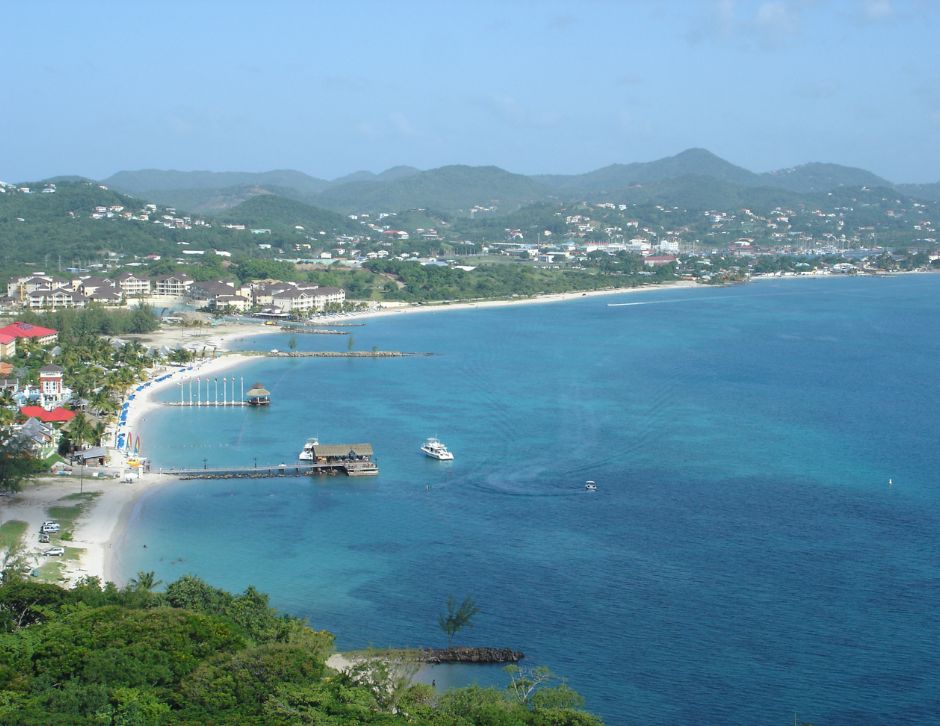
Featured Image: Gros Islet and Rodney Bay, as seen from Pigeon Island | Source: Lii, Public domain, via Wikimedia Commons
Related Reads.


