
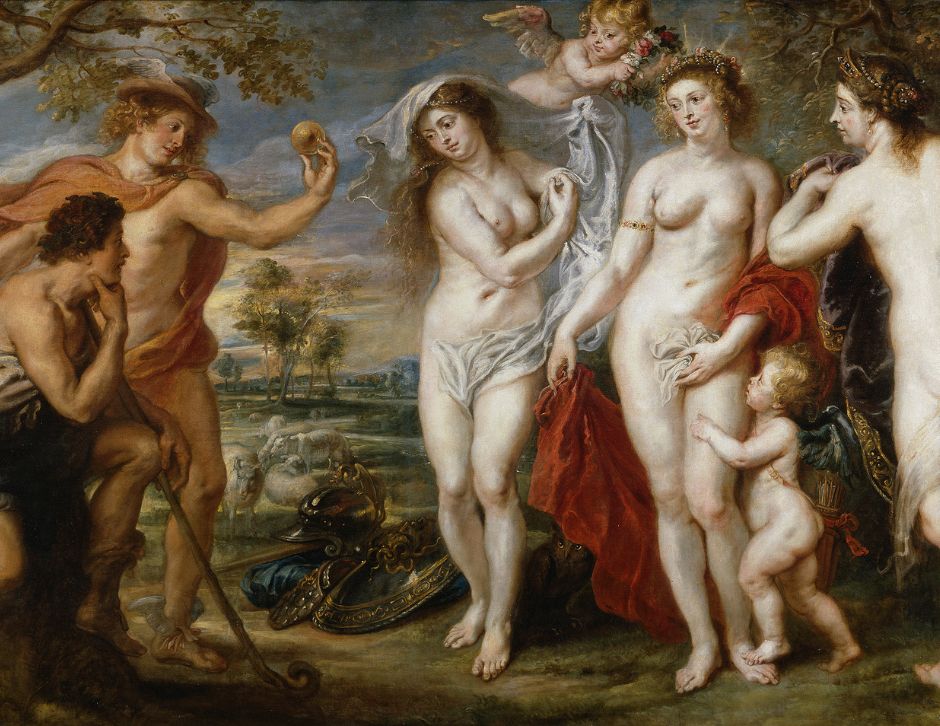
A fleshy and morbid feminine urge with the fairest limp was long associated with Rubens, the artist whose dramatic chiaroscuro, anatomical figures, and voluptuous female body contrasted with the dark Baroque period. These masterpieces by the Flemish painter certainly show femininity that might stir the normative society of today’s era with controversy. The CaixaForum in Barcelona presents this immaculate depiction of feminity through some of the masterpieces by Rubens from Prado Museum, which will last until September 21, 2025.
Being the sixth exhibition organized by CaixaForum in alliance with the Prado, the art show further served as a reason to restore around fifteen works from the main art gallery of the State. These restored works that include some of the sketches, and engravings, including The Entombment of Christ by Jordaens were never exhibited before, making the exhibition one of a kind for Rubens lovers. These works mark an importance in the artist’s career as he met Velázquez, the Antwerp master who advised him to apply himself to examine the Titians in the Royal Collection and travel Italy. The Director of the Prado, Miguel Falomir, said in the presentation of Rubens,
“Velázquez heeded him, because “even geniuses need stimuli.”
The exhibition will bring together sixty-two works by Rubens and his schools, including Anthony van Dyck, Jan Brueghel the Elder, David Teniers, and Jacques Jordaens. The event is an opportunity to publicize Rubens’s collections outside of Madrid, further introducing the panoramic art of the artist to the world. Prado has just inaugurated a retrospective of Paolo Veronese and the exhibition of Rubens will have a powerful influence on his contemporaries and even on the artists who are distant in time such as Delacroix.
Falomir commented,
“I am often asked which great artist I would go to dinner with, and I have no doubt about it: Rubens, a successful painter, highly cultured and at the same time pleasant to talk to and affable, who loved and was loved, who expressed the joy of living in everything he did or tortured and cursed painters like Van Gogh, who after having dinner with him would rather make you want to slit your wrists.”
Though the comparison may be unfair, as both the artists were completely different and that’s what made their art so different or nothing alike, it has its effect on what the exhibition wants to convey through Ruben’s art. The enormity of the figure and influence of Rubens on the art world is the simple motive of the exhibition which Westerners must know. As a painter, courtier, diplomat, collector, polyglot, and the great connoisseur of antiquity and Stoic philosophy, Rubens was a man who must be known to every single generation. In fact, not only did Rubens achieve notable success, but the personalities of his assistants, followers, and the artists he influenced also played a significant role. Among them are Van Dyck, whose Pietà is currently exhibited at CaixaForum; Teniers, known for the programmatic work The Monkey Painter, which sarcastically explores the distinction between imitation and innovation based on classical themes; and Jan Brueghel the Elder, who specialized in landscapes and still lifes. Rubens often collaborated with Brueghel, creating substantial works together, including The Infanta Isabella Clara Eugenia, which deserves recognition as well.


The School of Rubens further brought mastery in the category of great spectacle in still life, such as Fruit Bown by Frans Snyders, or Concert of Birds by Jan Fyt. Hence, the exhibition is worth watching.
The works in this exhibition offers unexpected reasons of wonders like a dog sleeping peacefully under a chair or a snake at the feet of the Immaculate conception. Other miniature works that are included in this are Market and Laundry in Flanders by Brueghel the Elder and Joost de Momper II, Earthly Delights and The Sight and Smell by Brueghel, works of Hendrick van Balen and Frans Francken II, and exercises as delicate as that of Rubens himself combing rather than painting the hair of Diana and her nymphs surprised by satyrs.
Featured Image: Judgement of Paris (Prado Version) by Peter Paul Rubens; Peter Paul Rubens, Public domain, via Wikimedia Commons.
Related Reads.


