
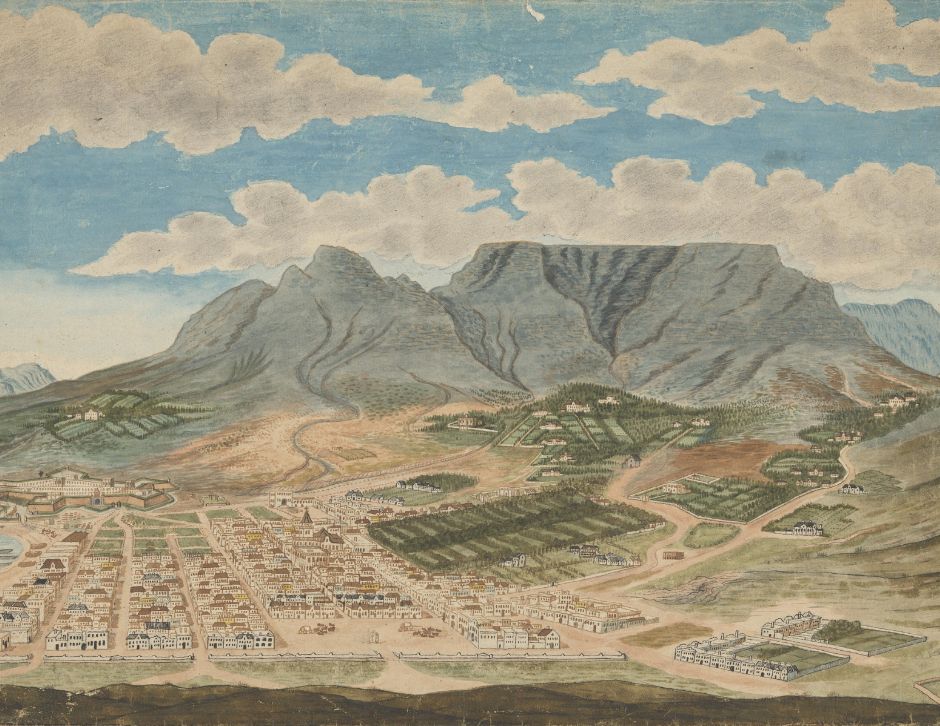
Recently, the Rijksmuseum and the National Archives have acquired the extensive archive of the Dutch Swellengrebel family. What makes this archive special is that it spans 10 generations, dating back to the 17th century, illustrating the differences in culture and politics over time. A selection of watercolors and archival documents will be on display at the Rijksmuseum from June 4 to November 30, 2025. The oldest of the family archives can also be consulted in the reading room of the National Archives from June 4, 2025.
The Rijksmuseum acquired the Swellengrebel archive and collection on behalf of the State of the Netherlands, with the support of the Johan Huizinga Fonds/Rijksmuseum Fonds and Fonds de Zuidroute/Rijksmuseum Fonds. Managed by the National Archives, the objects are part of the Rijksmuseum collection.
Some of the most fascinating items from this collection are Hendrik Swellengrebel the Younger’s (1734-1803) travelogues and watercolors from his three journeys around the former Dutch Cape Colony (now part of South Africa). Moreover, the acquisition comes with the extraordinary old journals that offer insights into the relations between colonialists and the original inhabitants of the region. Furthermore, it includes drawings of Augustus van Bengalen, one of the enslaved people in Cape whose name and portrait survive to date.
The Swellengrebel family archive holds remarkable importance in the publication as it is a rich source of information on the family’s life who were directly involved with the Dutch Cape Colony. This significance was given after historians became aware of the content of this archive following the publication in the 1930s of several primary sources of history.
Hendrik Swellengrebel the Elder (1700-1760) was the colonial governor of the Cape from 1739 to 1751, whose activities are recorded through this archive. Further, it contains information on the members of subsequent generations with the intricate details of the legal and medical activities of the Netherlands. One of the exceptional points to note about this collection is that it has no incomplete information. For instance, it even contains items such as the 1751 invoice for a 112-piece Chinese tableware service decorated with the Swellengrebel coat of arms, which further provides an insight into the size of the original set. Another crucial item from this archive is the travel supplies of Hendrik Swellengrebel which include ox carts for transportation, buckshot, and nets for hunting. Thereby, the archive gives a deep insight into living through generations.
At the Rijksmuseum, a presentation has been scheduled to explain the collection on the occasion of its acquisition, giving a particular focus on the travel journals of Hendrik Swellengrebel the Younger and the watercolors he commissioned from Johannes Schumacher (?-1792). These compositions depict the landscapes, animals, and people that the Swellengrebel family journals wrote. One of the most notable drawings depicts animals such as ostriches, rhinoceroses, and buffalo. The display also features Johanna and Helena Swellengrebel’s diary and drawing. Furthermore, they collaborated on the journal of their voyage from the Dutch Cape Colony to the Netherlands in 1751, which records the journey as a woman passenger which was quite rare at the time.

The oldest part of the archive goes on show in the reading room of the National Archives from June 4, 2025. Some of the most outstanding items of this collection have been digitalized as viewed from the National Archives website. They consist of travel journals by Hendrik Swellengrebel the Younger from one sea voyage and three overland journeys, along with travelogues authored by his sisters, Johanna and Helena Swellengrebel.
The acquisition marks a significant step to learning history through the lens of literature and paintings. Visiting such an exhibition is like stepping back in time.
Featured Image: View of Cape Town and Table Mountain, Johannes Schumacher, ca. 1777. Purchase with support from the Johan Huizinga Fund/Rijksmuseum Fonds and the Fonds de Zuidroute/Rijksmuseum Fonds.
Related Reads.


