
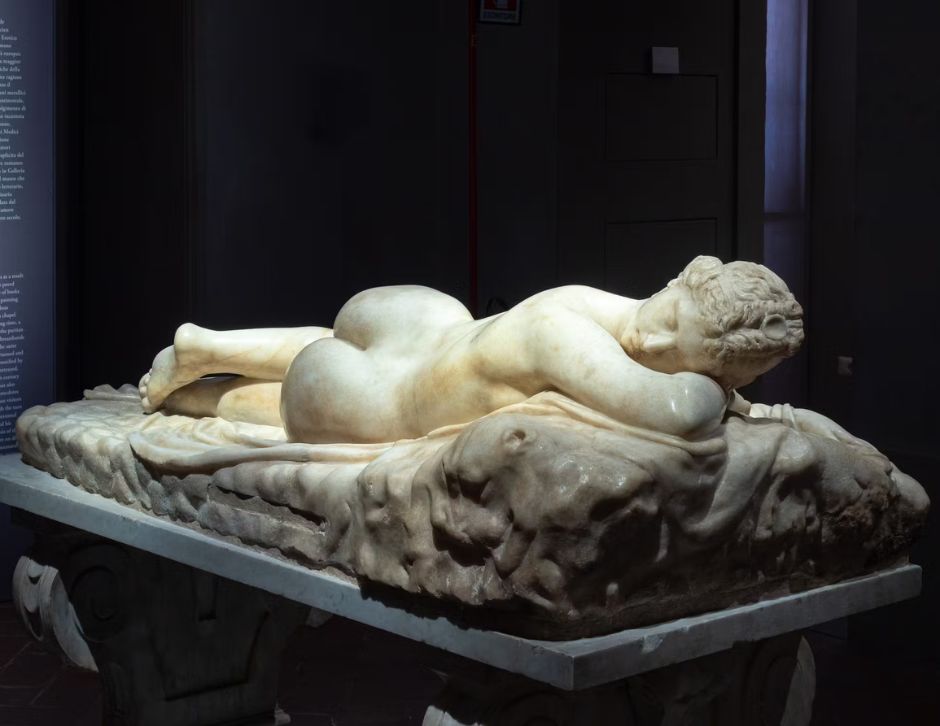
The eighteenth century is, if not the only, one of the most intellectual periods in art that subjected events of psychology and politics and revived the older practices of European masters in an attempt to be more suggestive and practical about subjects. The period was filled with masterpieces and above them, artists with sizable importance- Francisco Goya, Liotard, Vigée Le Brun, and more; ones who are revived a decade later through Florence and Europe. Arts of the Eighteenth Century at the Uffizi Exhibition from 28/05/2025 to 28/11/2025.
18th century, or should I say The Age of Enlightenment, will be narrated through a carefully curated collection of 150 works, including paintings, sculptures, furniture, porcelain, prints, and a large tapestry set up on the sumptuous ground floor of the gallery. What makes this exhibition even more exclusive is most of these works have never been seen before and others have been inaccessible for over a decade due to the museum’s extension works.

Noting the words of the Director of the Uffizi Galleries and the curator of this exhibition,
“‘Florence and Europe’ aims to trace an extremely multifaceted century through its aesthetic culture, interweaving the general narrative of the context with the management of the Uffizi Galleries as Europe’s first modern museum. It’s a complex story rich in subtexts and nuances that we have constructed with patience and dedication, making works from the collection that have not been seen for many years, or have never been exhibited, available to the public”.
– Director of the Uffizi Galleries, Simone Verde
“The works on display, besides being of great quality, have the merit of offering insights into a century that was crucial for the formation of the modern mentality, sensibility and even taste. Today, millions of people come to Florence every year, attracted by the myth of the early Renaissance: the rediscovery of this period occurred precisely during the 18th century”.
– Curator of the 18th-century Painting of the Uffizi Galleries, Alessandra Griffo
Florence and Europe. Arts of the Eighteenth Century at the Uffizi aims to inform viewers about the age in ways how it influenced Western thought, aesthetics, and taste. It was also crucial for the museum itself, marking the first time in the world that a dynastic treasure chest of royal collections into a modern museum. It was at this time when the Medici descendant, Anna Maria Luisa, witnessing the end of the dynasty in 1737, donated the family’s works to Florence “for the ornament of the State.” In 1769, Pietro Leopoldo, Grand Duke of Tuscany, used the valuable donation to open Uffizi and allowed the citizens to visit the museum freely, greeting them with a treasure to be viewed on the feast day of Florence’s patron saint, St. John (24 June). This event followed several changes, culturally, politically, and aesthetically. To intercept this, Grand Dukes in Florence took the assistance of the Uffizi Galleries and encapsulated it in a way that the continent can be felt.
Featured Image: Exhibition View of Florence and Europe Arts of the Eighteenth Century at the Uffizi; Source: Le Gallerie degli Uffizi
Related Reads.


