
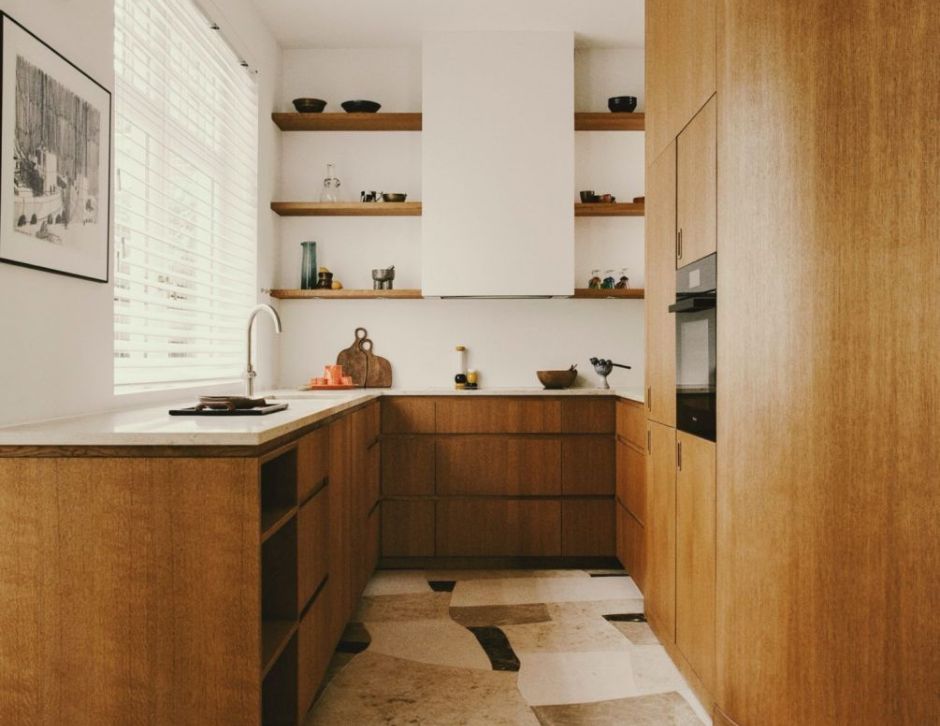
The key to interior design is attention to detail, and taking the very thing for granted can result in homes that resemble some Bollywood actors’ spaces, who, in pursuit of uniqueness, made their homes a genre-less museum. This attitude can not only spoil the look but also add unnecessary costs while challenging the functionality of any space. Since we do not want to end up with interiors that are undesirable, today, I will explain the necessity of kitchen storage and how to choose kitchen cabinets to make cooking an experience rather than just a necessity or chore for you. However, before we begin, here’s a quick word from the sponsor of this article.

If you are reading this article, you do not undermine the value of kitchen cabinets. However, as much as we need them to store everything, we also expect them not to be below par in interior styling. Hayden Island Cabinets addresses every aspect and crafts customized solutions for your kitchen. Give them a visit; it is highly possible they are your final destination to perfection.
What Are Kitchen Cabinets and Why Are They Important?
A kitchen cabinet is a built-in piece of furniture that serves as storage in kitchens. They comprise shelves, drawers, and/or doors, and sometimes task lights, to store kitchen essentials. Kitchen cabinets can also keep countertop items and sometimes store appliances like ovens, stoves, refrigerators, and dishwashers. Other than these, they can be useful for the following purposes:
- Protecting utensils and other essentials from dust, moisture, and grease.
- Being child-proof in nature, preventing their access to tools such as kitchen knives.
- Adding aesthetics to the kitchen by matching the interior style and the color palette.
- Ensuring optimum use of space through different types of drawers and shelves.
- Providing a dedicated space for each kitchen tool to further improve the workflow.
- Helping in arranging and hiding electrical cords and plumbing.
How to Choose Kitchen Cabinets: Step-By-Step.
1. Choose From the Types of Kitchen Cabinets.
Kitchen cabinets can be modified through their finishes, moldings, and other details to fit any kitchen interior. However, when we categorize them from a construction point of view, there are two types of kitchen cabinets:
1. Face-Frame Kitchen Cabinets.
These types of kitchen cabinets have a thick frame on the edges with the door or drawer mounted upon them. The horizontal components of this frame are called the rails, and the vertical pieces are called stiles.

Often, people confuse face-frame kitchen cabinets with posing a traditional look only; however, they can be customized to accommodate any interior design. To achieve this, these kitchen cabinets come in three different styles:
1. Full Overlay Face-Frame Kitchen Cabinets.’
These types of kitchen cabinets use a face-frame construction, but the door or drawer covers most or all of the frame.
2. Partial Overlay Face-Frame Kitchen Cabinets.
Partial overlay kitchen cabinets cover only a part of the frame.
3. Inset Face-Frame Kitchen Cabinets.
These kitchen cabinets have doors or drawers sits inside the frame, flush with the front.
2. Frameless Kitchen Cabinets.
Frameless kitchen cabinets were made famous in the mid-20th century, and the doors or drawers are mounted on the sides of the cabinet box, covering the entire front of the cabinet.

Face Frame vs. Frameless Cabinets.
Choosing the right kitchen cabinets requires you to first decide on the type of cabinet—i.e., face-frame or frameless. The following information on each cabinet will help you make the right decision.
- Face-frame and frameless cabinets differ not only in appearance but also in space utilization. Face-frame cabinets may restrict access to bulky or large items due to the frame, while frameless cabinets provide easier access.
- Coming to the second point, a face-frame kitchen cabinet is more rigid and durable than its frameless counterpart. This is mainly because of the construction, not the materials being used for it. Consider this: a frameless cabinet is not sturdy enough to take higher loads, compared to a frame in the face-frame cabinet, which adds strength and creates a more solid structure.
- Frameless kitchen cabinets are commonly used for contemporary interiors, providing a modern look. Contrary to this, face-frame cabinets carry more of a traditional look, but as I said before, they can be tailored for interior styles through finishes and other necessary changes.
2. Consider the Budget.
Once you have checked the boxes for the types of kitchen cabinets as per the interior design, it is necessary for you to consider the budget and keep notes of pricing at each step, even installation.
3. Explore and Pick the Right Material.
Getting flushed in interior design is not a wise option, given that you have a home to maintain—the doors, rugs, walls, lighting, and other tiny elements will not take care of themselves. Realizing this, you need to pay attention to the material of your kitchen cabinets. Use the three-element rule: cost, durability, and finish.
Starting with the cost, make sure to stick to the budget. Buying these cabinets should not affect any other element of your planning.
Next, take durability into account. This will guarantee lesser maintenance and long-term usage.
Last but not least, choose from the finishes you want for your interiors. This should not be less relevant by any means, since you have to live around it for, hopefully, a couple of years.
Now that you know the basics, let’s list down a few materials that you can choose from:
- Wood: One of the most popular options for cabinets, wood is known for its durability and cost flexibility. You can choose either solid wood, engineered wood, or particle board. Pricing for solid wood, such as cherry, oak, or maple, is suitable for high-budget projects. However, engineered wood and particle board are reasonably priced, with particle board being less durable and having low water resistance, making it an unreliable option for kitchen cabinets.
- Painted Finishes: Kitchen cabinets that use this material have a smooth look and can be made from different materials. Given the latter, these types of kitchen cabinets can be highly flexible for the budget. However, attention should be given to detail to ensure quality and finish.
- Laminate: As the name translates, they use a sheet to cover a given material and can mimic any look, such as wood or smooth surfaces. They are highly cost-effective and durable alternatives that can also be remodeled if a change in interior design occurs.
- Stainless Steel: Suitable for commercial kitchens or high-budget projects, stainless steel is durable, easy to clean, and fireproof, and brings a touch of luxury and aestheticism to the kitchen interiors.
- Aluminium: A cost-effective material that is light, durable, and easy to clean, aluminium is highly suitable for modern kitchens.
4. Evaluate the Quality of the Cabinets.
Post your assessment of different materials in real life, you need to check the quality of the cabinets and whether or not they have any finished inaccuracies, such as minor scratches, bubbles, dents, and even unpolished edges and finish of the faying surfaces.
While most ignored aspects will come to your attention during a close inspection, you should learn more about the material from the seller and seek their advice, per your kitchen’s usage (commercial or domestic). Further, collect the product’s brochure and learn more about the product alongside its warranty.
5. Draw a Comparison Between the Brands.
Once you establish the types of kitchen cabinets and choose the products that are in your budget, it is time that you draw a conclusion for the brand you should purchase. Though I recommend going for custom furniture over factory-made products, given the rigidity of the former, when choosing the latter, you should always make a calculated choice based on cost, quality, reviews, and warranty.
6. Weigh the Functionality to Choose the Cabinets You Need.
You probably have already planned this in your head, but it is necessary to lay out a plan to increase accessibility in your kitchen, especially where you spend the most time. For instance, a prep center near the sink, a cooking section near the appliances, and crockery near the dining or the dishwasher. You should further use narrow spaces for vertical drawers to store spices and bottles of oil, sauces, and vinegar, keep wicker pull-outs near the prep area, and have trash pull-outs near the sink area.
Lastly, do not forget to maximize the use of the shelving system by choosing the right types of shelving, such as adjustable or fixed, over-the-door shelves, pull-out shelves, or lazy susans.
7. Select the Right Hardware.
Just the most intricate thing to do when you go out and choose kitchen cabinets—you may ask why; let me answer that quickly. Kitchen cabinets and shelving contribute significantly to interior styling and functionality, but the right kitchen cabinet hardware ensures durability and accessibility and acts as a finishing touch. Consider it the signature for a legal notice; you can’t call it valid unless there’s a valid signature. Similarly, kitchen cabinets are incomplete without proper hardware. The following are the hardware items that kitchen cabinets need:
- Shelf Support: Necessary to support adjustable shelves and provide stability to those that are meant to hold heavier items.
- Drawer Slides: These are mechanisms that ensure the smooth opening and closing of the drawers.
- Hinges: Hinges are the components that are used to adjoin doors to the cabinet or the frame.
- Knobs: Hardware used to open and close drawers or doors.
- Latches: Though ignored by many, they ensure the doors and/or drawers are closed and not unnecessarily open. You can also use magnets instead of latches, but they may need to be changed after a certain period of time.
- Locks: Essential to childproof the kitchen and keep cabinets storing cleaning supplies and electrical cords closed.
- Lighting hardware: Increases visibility of items and/or articles that are kept far from the opening window of the cabinets.
- Vents: Vents are crucial to provide airflow and help heat to escape from appliances such as refrigerators, certain dishwashers, other panel ready appliances, and the HVAC system.
- Appliance Pulls: Larger-scale handles to assist in the opening and closing of panel-ready appliances.
- Hooks: Small hardware accessories to increase accessibility to hand towels and other essentials.
- Toe Kicks: Horizontal board installed below the cabinets for various reasons, including a finished look.
8. Take Measurements.
While I could have advised you to take measurements of the space and avoid the obstructions while doing that, I highly recommend seeking the help of a professional to do the measurements and recommend the required space for your kitchen essentials and appliances.
Final Words.
You must have already understood the importance of kitchen cabinets and choosing them rightly. Though the process is tricky, even when it sounds easy, a little attention and this step-by-step guide will bring you to comfort and act as an actionable answer to how to choose kitchen cabinets.
I will see you later with another article bringing value to your interiors, but if you have any questions about kitchen cabinets, I’d love to hear and answer them in the comments below.
Featured Image: Photo by Eefje De Coninck & Senne Van der Ven, via Milk Decoration.
Frequently Asked Questions.
Two simple ways of choosing kitchen cabinet color are to either match it with the surrounding furniture or treat it as one of the primary colors, either complementary to or contrasting with the wall color. Complementary colors are located side-by-side on a color wheel, and contrasting colors are opposite each other on a color wheel.
Kitchen cabinets require various hardware components, and to choose among them, it is important to plan beforehand, decide the purpose of the cabinets, and use a checklist for each cabinet section—simply cross the ones that are unnecessary for any cabinet. This free article shares the crucial hardware components for kitchen cabinets.
There are two types of kitchen cabinets: face-frame kitchen cabinets and frameless kitchen cabinets. While frameless kitchen cabinets are comparatively new to the face-frame, the latter is more durable and can match various aesthetics, contrary to the frameless ones that pair well with modern interiors.
Related Reads.


