
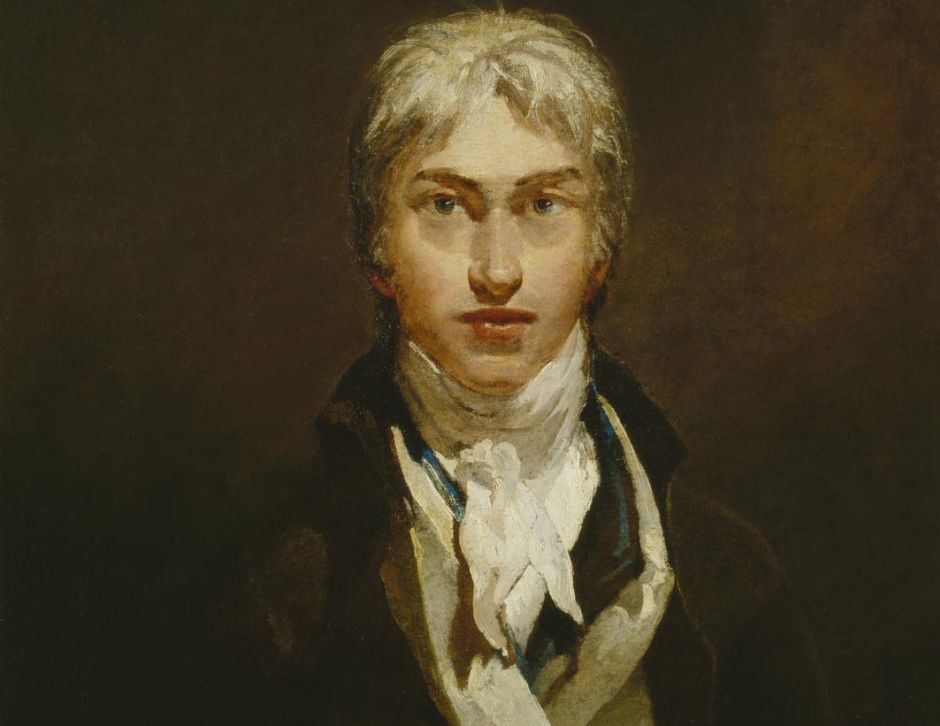
In art history, Britain witnessed a unique flowering of the school of native landscape painters. However, it was only in the 19th century that landscape art enjoyed its popularity, as before this, portraits and history paintings were prioritized and collected by elite collectors. In the 17th and 18th centuries, landscape existed, but only in the backdrop to any subject, taking part in the canvas but as a supporting lead. Interestingly, it was not even regarded as a true art form, as it only served as an expression of the ideals of individual artists. However, when landscape painting reached the hearts of people in the 19th century, one of the artists who changed the landscape of this art was J. M. W. Turner. Marking his 250th birth date, Tate Britain is hosting one of the biggest exhibitions to display the largest collection of J. M. W. Turner. It started already and will remain year long.
The exhibition will be hosted in different cities in London, Edinburgh, Leeds, Manchester, Liverpool, Norwich, Bath, and Sussex. Furthermore, different types of content, like books, films, and digital content will be presented alongside a documentary by BBC. In addition, Leigh’s 2014 biopic Mr. Turner will be screened at BFI Southbank, and Tate’s website will feature a complete catalog of Turner’s 37,500 sketches and watercolors. Two of the most crucial events of this event are an international conference at Tate Britain and a summit at Turner Contemporary on art’s connection to nature. However, this event is not bound with any distance. There are other events, including an exhibition in New Haven, Connecticut home, by the Yale Center for British Art; in Ohio, the Taft Museum of Art and the Cincinnati Art Museum will have the watercolor sketches of Turner, and in Shangai, there will be ‘Dialogues with Turner: Evoking the Sublime,’ organized by Tate in collaboration with the Museum of Art Pudong. Lastly, the Turner Prize will be staged in Bradford as the major highlight of the Culture program.
The event focuses on the nine rooms of JMW Turner which will slowly enfold the journey of the artist through his paintings. These rooms show:
“Room 1- Rise to Frame- It showcases a brief introduction to the artist’s life.
Room 2- Toil and Terror at Sea- It portrays the dark side of life through terrifying atmosphere, shipwrecks, and storms on his canvas.
Room 3- Turner and his critics- This gallery highlights the initial reactions to Turner’s paintings. Regardless of whetherhis works were praised or criticized, he consistently attracted attention in exhibitions.
Room 4- Experiments on Papers- This will portray a selection of Turner’s ‘vignettes’, small watercolours made as illustrations for books.
Room 5- Experiments on Canvas- The paintings from this room are some of the classic examples of the artist’s boundary pushing late style. They are ethereal and lumnious with no outlines and edges as if every color blend into one another.
Room 6- Sea Power- The room shows the paintings with subject ranging from everyday work of fishermen to major naval battles, reflecting Britains’ identity as a maritime nation.
Room 7- Travels in Europe- At this room, the viewer will witness Turner’s art that revolved around travel. The paintings of this room will present a landscape of Europe as the artist saw and imagined.
Room 8- John Constable- This room will portray some of the finest romanticized paintings of English countryside.
Room 9- Morning after the deluge- This exhibition brings together Paul Pfeiffer’s video installation, “Morning After the Deluge,” and the painting by JMW Turner that inspired it. This marks the first time these two artworks have been displayed together. The painting, “Light and Colour (Goethe’s Theory) – the Morning after the Deluge,” is displayed outside this room alongside its complementary work, “Shade and Darkness – The Evening of the Deluge.”
Maria Balshaw, Director of Tate, expressed on this event,
“Turner is a standout figure in the story of British creativity. It is Tate’s privilege to care for the world’s biggest collection of his art and showcase it to the widest possible public. Over the course of this year, I’m delighted that we will be showing over 150 of his stunning works at Tate Britain as well as lending over 100 more to venues right across this country and beyond.”
Turner was a painter of protean variety, who covered every style and subject available from quieter skies to wildest seascapes. He quickly became a rising star in the art world despite his humble beginnings. Having known as the father of modern art, his intuitive brushwork and use of color were even compared to the art of Monet. Though the entire exhibition is significant to see the British romantic art, the artist’s birthday April 23, 2025, marks an important day that can’t be missed. The museum, along with the entire country, has made this event so captivating that it has almost revived the greatness of landscape art.
Featured Image: Joseph Mallord William Turner Self Portrait; J. M. W. Turner, Public domain, via Wikimedia Commons.
Related Reads.


