
Nostalgia is a Latin word with “nostra” meaning our and “algia” meaning pain and it is more appropriate when it describes the yearning to return to home. Not only limited to human emotions, it finds its place in every single artifact longing to return home. Having said that, a major fragment of the main Gothic altarpiece of the church of Sant Marti’d Escalarre by Mestre de Son, finds its place back to its home after being exiled, for more than a century. The Department of the Culture of the Generalitat bought it for 25,000 Euros from Palau Antiguitats, which will be now displayed in the Ecomuseum of the Valls d’Àneu.
According to El Punt Avui,
“The antiquarian Albert Marti Palau, responsible for this space next to the Jardines de Gràcia, acquired the table at an auction in Switzerland, which in the catalog did not provide any information about its provenance.”

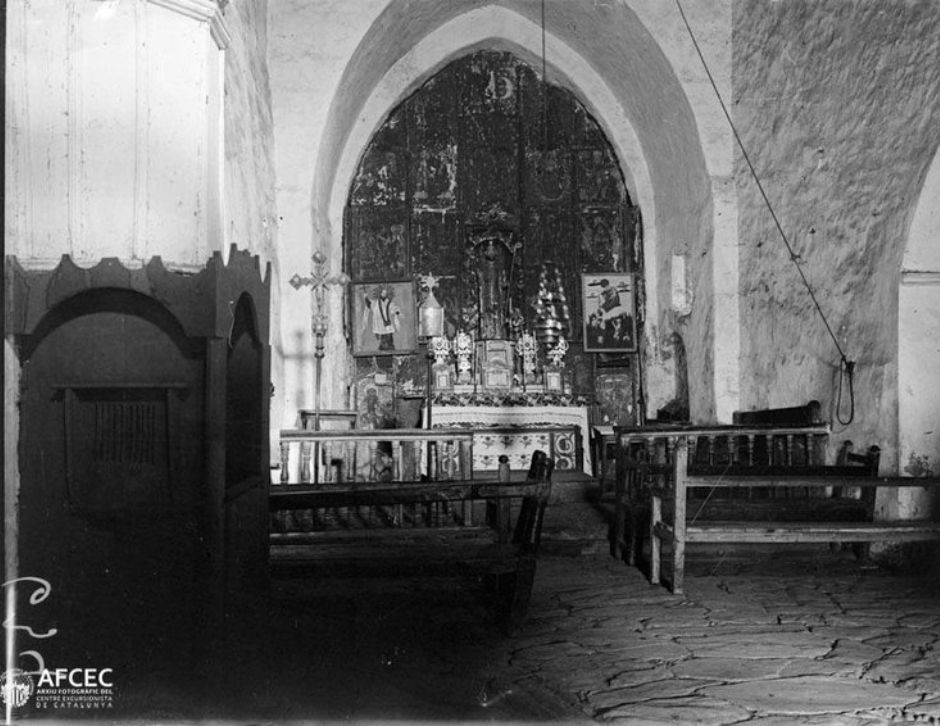
A little provenance of the panel is that it came out between 1903 and 1913 from a small church near the Ecomuseum of the Valls d’Àneu with the many tables that made an immense altarpiece dedicated to Sant Marti. The existence of this panel only came into the limelight, when an art historian and professor at the University of Lleida Alberto Velasco found an old photograph of 1903 made by Joaquim Morelló. Joaquim was a pharmacist from Barcelona who was born in Esterri d’Àneu and was fond of hiking. The old picture showed the entire altarpiece in clarity at its location. After this finding, Velasco began to discover the fragments of the altarpiece from the entire world; he found the first two at the Fogg Art Museum from the legacy of Lucy Wallace Porter, wife of Arthur Kingsley Porter, Harvard professor expert in Romanesque architecture and sculpture. The couple bought this altarpiece in 1913 from an antique dealer in Verona. Then, Velasco concluded that the Pyrenean altarpiece traveled to Italy intact and that this entire set was sold in twenty fragments.
Of the twenty fragments, this panel of Catalan Gothic detected around half of them in the last twenty years and found them in the USA and Europe. One of the pieces came into the market on auction, but when Generalitat tried to buy it years ago, the budget limitations didn’t allow them to buy. But the winds have blown in the interest favor of the Catalan heritage when after so long one of the panels is repatriated to the country after more than a century.
If you wish to read the adventurous story of the discovery of these panels, Velasco wrote a book, In Search of the Lost Work (Pòrtic) which becomes a must-read for the art nerds. In one of its chapters, he tours this mournful altarpiece which is originally from the Pallars Sobirà. The life of the art historian, Velasco is no less than a romantic thriller in search of these panels and it is his dedication and absolute patience that Spain got one of the important artworks recognized.
Resource.
Featured Image: The image from 1903, with the entire altarpiece in the church; Source: JOAQUIM MORELLÓ, via El Punt Avui+
Related Reads.


