
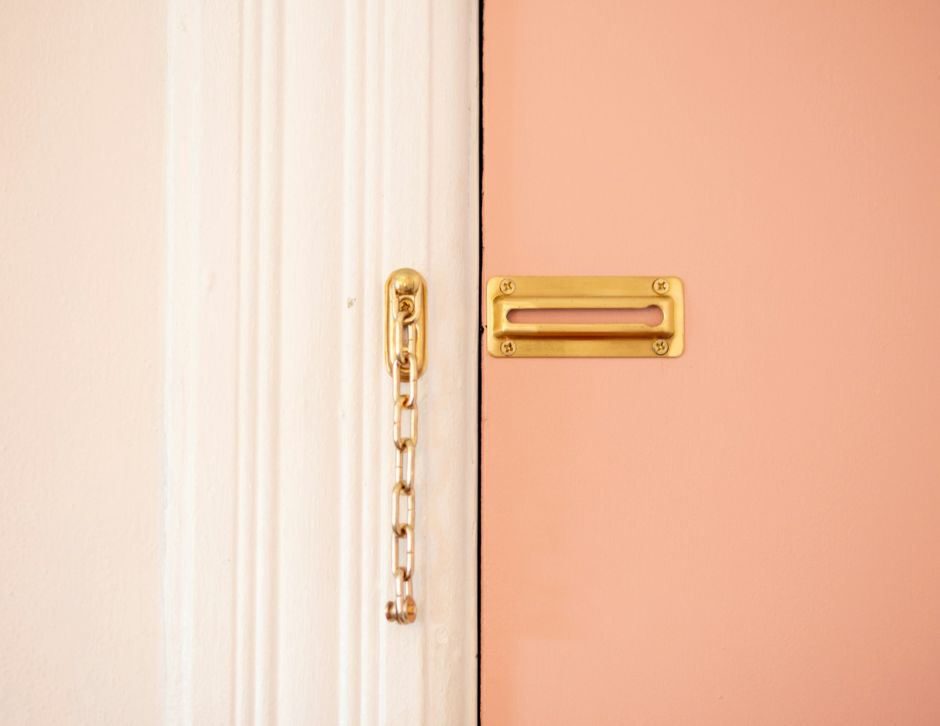
It’s raining outside and I love bike rides this season. Regardless of how strong it is dribbling, I take a long bike ride to my favorite coffee shop so that I can finally introspect on my thoughts and productivity, of course. Today, when I took a small break from my work and sipped the coffee while I was damped by the mild shower, the first thing that kept running through my mind was my interiors but not the decorative ones. For so many days, I have had a feeling that something is off but I was trying to figure out whether my coffee table had extra items, or my couch had fewer cushions, or if it was lighting. After considering it, I felt that there had been a problem with the tiniest and most negligible aspects, door handles, giving me such an inflated sense of restlessness, and it’s not just the entrance but even the bathroom and the balcony. Further, even my flooring is lacking coordination, which I have longly kept hiding by the wonderful yet empty area rugs and carpets. This was my moment of realization that made me value functional detail that completes any space with a sense of security, functionality, and even decoration. From having a perfectly streamlined door handle to the right texture of the floorings, and to the balanced lighting at all times, these are the aspects of attention that bring much difference. Hence, I will be drafting articles on these topics that no one ever talks about. Starting from the door latches, I will tell you their types and how to pick an appropriate one for your home. Additionally, this is the most significant element that comes under home security so do not think of ignoring today’s class.
History of Door Latches.
If you look back at the history of locks, the Greeks followed Egyptian locks chronologically, and the Greek locks were far more simpler than the Egyptian ones. However, the Greeks are also credited with inventing the keyhole so that there is no need to poke one’s entire arm through a hole in the door to reach the lock inside. In Book XXII of The Odyssey, Homer writes,
“Penelope took a crooked key in her firm hand, a goodly key of bronze, having an ivory handle. She loosed the strap, thrust in the key, and with careful aim shot back the door bolts. As a bull roars when feeding in the field, so roared the goodly door and flew open before her.”

The Greeks had artist-craftsmen of metal for the protection of the fair city. Locks from the Greeks were simple as their keys were merely large hooks shaped like a sickle. Further, they used lengths of rope tied into complicated knots to hold their doors against the intrusion. The famous Gordian knot of the Phrygia was the knot that no one could untie and was the best lock of the Grecian lock.

The Romans had locks, but they had a necessary door lock other than padlocks. Usually, they turned on the pivot set in the lintel and threshold on their outer doors for protection. They further added door locks in the form of a metal plate with a keyhole fastened by rivets in front of the door so that the lock mechanism remained in channels cut into the door frame behind the plate.
When the Gothic period began, keys were made from iron or bronze, but they were flat with elaborate bows and bits. Keyholes that were originally horizontal have been replaced with vertical keyholes. In order to accomplish this, Gothic craftsmen had to devise a more complicated internal lock mechanism. However, the locksmithing had a change in the advent of the Renaissance. Unlike previous locks, the Renaissance had a self-locking bolt with a beveled end and a spring, by which once the door was closed, the bolt snapped into its place.
These older locks or door latches gained sophistication and ornamentation between 1550 and 1650. The French keys, called, clefs de chef-d’ oeuvre or masterpiece keys and were beautiful. Similar to France, the Spanish locks and keys were also attractive, and they had an attention to detail in them. The use of multiple keyholes and multiple locks was fairly common. One chest had 12 bolts operated by twelve different keys. Typically, the Princess Isabelle of Bavaria had an ultra-secure door latch that required five keys to operate it, which was made to guard the apartments.
Coming to the modern locks, there was a gradual development of them with the start of the Industrial Revolution. Unlike this general period, there were more practices to decorate or conceal the keyholes. And the first modern lock, patented in 1778 was invented by Robert Barron of England. It had wards around its keyhole with an additional pair of spring tumblers of different sizes which checks the bolt.
In 1784, Joseph Bramah patented the first of his many lock inventions, which was more organized, complicated, and secure than any other locks. Then in 1818, the three Chubb brothers, Charles, Jeremiah, and John patented the first of the improved locks, which were based on the Tumbler principle. This way door locks went a long way from antiquity.
Discussing the Types of Door Latches.
1. Mortise Latches.
The name mortise latches is for the fact that a mortise is a cavity or slot, usually rectangular for a matching insert of the same dimension to lock the door. Now, normally used in the areas which have free access, these can be used in the interiors. First introduced in the mid-1700s, these locks were used for the formal rooms of wealthy homeowners. Though common now, the best doors for a mortise latch can be of a formal office or an in-house library to create formalism.

In Mortise locks, the mechanism is embedded into the door rather than the more vulnerable doorknob, which is positioned deep in a U-shaped cavity. Hence even if the doorknob breaks, the lock will do its work as the lock remains in the metal case within the door which can’t be reached. The best mortise locks have a spring latch and a deadbolt which is a safe option. Also, don’t use the old-fashioned mortise locks but replace them with a newer model which compulsorily has deadbolts so that they are safe.
It can best go with the doors which are thick enough to accommodate this mechanism. Also, please understand that these are not for entryways as their bolts have just a half-inch throw, and for maximum security, they must be at least one inch.
How to Install Mortise Door Latches?
- First mark the outlines of the mortise, knobs, and cylinder holes on the door.
- Mark a series of holes down the mortise edge at about 1/4 inch apart.
- To smoothen the mortise inside the wall, use a flat side of the chisel to shave. Further, drill the holes for the cylinder, knob, and thumb piece.
- Slip the lock into the mortise, and mark the edges of the faceplate on the door. Remove the lock and chisel out a shallow mortise for the faceplate.
- Screw in the lock, the cylinder into the hole from outside the door, and secure it by tightening it with a set screw.
- Attach the outside thumb piece, then the inside thumb turn, and the inside knob. Finally, attach the trim.
2. Rim Latches.
Being the oldest locking device for a door, Rim door latches are more convenient as they are fixed on the door surface rather than set into the edge like the mortise. Hence, these go best with wooden, aluminum, or glass bathroom doors. With different colors and metal, it gives an additional door appeal too.

Having a vertical deadbolt that slides into a hardened metal hasp fastened to the door jamb, it acts as a safe jammer to the door. And the good part is that it can’t be forced or pried open.
How to Install Rim Latches?
- The first thing to do is mark the center of the cylindrical hole and screw each hole as per the template given with the Rim Latch using the hammer and screw.
- Drill the holes for the cylinder and install the lock. First, adjust the length of the drive bar, and fit the cylinder assembly into the hole from outside of the door. Tighten the screws.
- Mark the top and bottom of the strike plate. Fit this strike plate into the lock case and turn this thumb to hold the strike plate in place. Close the door so that this strike plate is pressed against this jamb and door trim. Then, mark the edges of the strike plate. Cut a line over a trim to the thickness of the strike plate so that it is fitted properly.
- After fitting the strike plate, cut the area of the jamb with a wood chisel. And finish the operation by drilling the screw holes and fastening the strike plate with screws.
3. Cylindrical Latches.
Cylindrical door latches are inexpensive and easy to install but unfortunately, it doesn’t act as a home security device as these can be easily opened by credit card. Even at its best, it can be used for the interior door and not the entranceways.

4. Deadbolt Rim Latches.
These are the best kinds of door latches that you can use for home security. A deadbolt rim latch is burglar resistant as it can be opened with a key that slides the bolt from the strike. There are two kinds of deadbolt rim latches, one which has one cylinder and the other one with two cylinders, the two cylinder is a better one because of its handling from both inside and outside. You can even use these latches for your windows as it is hard for a burglar to break out into such homes.

How to Install a Deadbolt Rim Latch?
- The first thing to do is mark the center of the cylindrical hole and screw each hole as per the template given with the deadbolt rim latch by the hammer and screw.
- Drill the cylinder hole as per the sizing of the template. Place the retainer plate into the cylinder hole on the inside of the door with the word “top” at the top and secure it with two wood screws.
- Insert the cylinder rose into the cylinder from the front side of the door. The drive bar that protrudes from the end of the cylinder must go first.
- Bolt this cylinder to the retainer plate with two machine screws and attach this lock to the inside of the door. There must be four evenly spaced holes which when lined up against the retainer plate and the cylinder rose allow you to bolt the lock case onto the cylinder rose with four machine screws.
- Install the strike, aligning it so that the bolt slides into it smoothly. Use a chisel to deepen the strike box receptacle in the door frame.
5. Dead Latches.
Dead latches are useful when there is the use of spring latch lock and there is a need for more security. Often called an “anti-shim device,” it combines the easiness of a spring latch with the security of a deadbolt. In the key-in-the-knob lock, you can recognize this dead latch as a small auxiliary plunger right next to the beveled bolt. Hence, in case you have a spring latch, combine it with the dead latch to give better security.

6. Night Latches.
Not all door latches are for security as the Night latch uses simple, keyless bolts. These can be either surface mounted or recessed into the door and jams. For real security, avoid using so-called barrel bolts, which are miniature versions of the basic hand-operated sliding bolt or spring-latch versions. Use them for basement doors but don’t use them for entrance or back doors as they are not good for security reasons.

You now know the common types of door latches and you can visit a good hardware store to buy them. For those who live in Australia and the United Kingdom, I suggest you check the door latches by Access Hardware for varied options, and for global availability, including America, consider checking Yale. The company is reputable and known through decades for its firm quality door latches. Please understand that the door latches, you now know, can be combined in different ways to ensure home security and usage.
Picking an Appropriate Door Latch as Home Security.
An average burglar spends five to ten minutes pricking the lock so you have to use sturdy door latches to stall your burglar for a longer time. The easiest thing is finding a hardened material latch with bolts of at least 1 inch long. Also, keep in mind to have a lock consisting of at least 5-6 cylindrical pins. It must have a “UL” stamp, a guarantee that they have been subjected to pounding, hammering, and drilling to determine how well they will hold up.
One good tip is always to have a chain latch attached to the burglar alarm so that if anyone tries to break through, an alert is raised.
Resources.
- All Thumbs Guide to Home Security by Robert W. Wood.
- Home Repain No Nonsense Guide Home Security by Pat Coen.
- Featured Image by amandavickcreative, via Unsplash.
Related Reads.


