
Moving home is a strenuous and overwhelming part of life. Recently, my mom had to relocate from the apartment she had lived in for the past 3 years to move into her own place finally. Of course, she was happy to have a place that she could call “hers” as she could now bid goodbye to the tiring moments of packing stuff, forgetting things at the old rented homes, and mental decay by the landlords, but with the happiness of settling, she also seemed to be overcoming a fear of leaving. Changing a location where my mom had social contacts and friends to a relatively unknown place was a task, and then there were numerous other unpredictable issues like matching the existing home decor with the newly constructed home, leaving immovable furniture, and even organizing heaps of clutter. I still remember that my mom was nostalgic about her surroundings when she had to leave the premises, although there was a joy of having her own place. I think the process of moving is in itself an incomprehensible work, but nobody cares about it much unless the moment arrives. This article is an attempt to make the process simpler, an exercise that we have gone through for years. Of course, the expert is my mom, who helped me write this article to provide you with tips that can make your moving relatively simpler. Further, after you read this article, check off the items once you complete them, which will help you to save from minor disasters like forgetting the moving van service, mailing your change-of-address cards, or making travel reservations. Next, I am laying out this moving checklist as per the budget, making it efficient. Let’s start.
Two Weeks Before Moving.
1. Having A Calendar.
The first task is to put together a calendar showing the weeks leading to your move. You can also jot down dates of different appointments (repairmen or movers), garage sale dates, possible moving days, address changes for mail delivery, and going-away celebrations. It’s just a calendar that will help you navigate and fix things before moving.
2. Moving Services Checklist.
The first thing to do is get an estimate from potential movers about shipping. But the most important thing is to go through the house and evaluate your belongings. What items do you intend to take, and what are things you want to set up for garage sales?
Let me tell you something from my experience. There will be numerous things like a wall-attached oversized wardrobe or shelves that are impossible to move to different places as they will simply add more to shipping costs. So, it’s important for you to find those things that are physically challenging to move.
The best part is to segregate every single item with the help of these questions:
- What are the items that are physically challenging to move?
- What are the items that need special services like packing, crating, truck reservation, vehicle transport, or relocation services?
- Is there any item that needs special circumstances for pickup, like the use of elevators or stairs, long carry to curb, tight corners, small doorways, parking problems, or any other?
- What are the items that are mere clutter and are not needed anymore?
This list will help you a lot in selecting a moving service. Then comes choosing the right service. So, here’s a list of questions that will help you to select the right movers.
- Do you want to hire an interstate moving company or a local one?
- Do you want to pack or unpack your own things or have the movers do it for you?
- Do you intend to move everything by your own truck or vehicle?
- Have you considered shipping some of your items by train, mail, or bus?
- Do you want custom crating for some fragile or valuable objects?
- Are you moving something big that can take up a lot of space, like a piano or pool table?
- Will the mover encounter any challenges at the new house, like a narrow street or lack of parking?
- What are your scheduling limitations?
- What is your budget?
These questions will help you to sort in the list of hundreds of movers. Then, once you answer them, you can take recommendations from a friend or family. In addition, do not miss any kind of advertisements that are coming your way. Here’s a website for checking how much do movers cost, no matter what your location is. All you need to do is fill in the location and your contact details, and a free quote will be on your way.
Now, after all these questions, schedule appointments with movers and ask them for their price, and according to your suitability, book one. However, I would suggest that you take an interest in better movers because moving is already a tiring job, and if a few bucks help you gain some comfort, take this opportunity.
3. Cleaning and Organizing.
The first step is to evaluate your possessions from the closets, attic, basement, garage, and storage area. Decide what must be sold or given away or can be packed up early. Accordingly, organize your drawers, closets, and storage areas to make them easier to work with. Label makers are a great tool that can help you do it. You can buy a Brady label maker as it is durable and easy to operate, and its adhesives are really good, unlike others that can’t work on different surfaces.
Now, one of the most significant things in this step is to photograph or videotape your possessions for insurance purposes. You can list items, including any electronics or collectibles, and then put receipts into one file with their estimate and purchase price. It is really important to handle your expensive belongings carefully.
Another significant thing to take care of is to use up your cans and food that is left in your inventory instead of buying anything new. This way, nothing goes to waste, and there is no additional responsibility for carrying food items. You can do so by making a list of things that are inside your refrigerators and cupboards so that you already know what things you need to buy.
Next, clean your rugs and carpets and write the dimensions and their location, whether they belong to the kitchen, dining, living, or bedroom. Also, clean the oven and refrigerators so that on packing day, you just wipe them with a clean cloth. You don’t want to have a big mess at the new place.
Organizing is all about taking care of what you need for your new home. Coming straight to medicines, check your medicine cabinet and get your medicines refilled so that after leaving, you enjoy your new home instead of running into buying things. Trust me, these small tips will work wonders.
Lastly, repair all those things that are left broken in your attics or basement so that you decide whether you want to keep them or donate them.
4. Packing and Transferring Records.
The most crucial part after organizing through labels is packing. If you are moving yourself or shipping some of your goods separately, I advise you to obtain all the necessary packing materials. Begin to pack those items, ensuring they are not daily life essentials. And hold a room to keep this packed stuff so that nothing looks crowded.
I am adding a few things that you can take help of for packing your stuff, like adhesive tapes, packing paper, cardboard boxes, paper for fragile objects, scissors, and bubble wrap.
| Heavy Duty Shipping Packing Tape | Buy on Amazon |
| Perforated Bubble Cushioning Shipping Wrap | Buy on Amazon |
| Packing Paper Sheets for Moving | Buy on Amazon |
| Honeycomb Packing Paper | Buy on Amazon |
| Max Strength Bubble Cushioning Wrap for Moving & Shipping | Buy on Amazon |
| 100 Pack Foam Sheets | Buy on Amazon |
| Honeycomb Packing Paper | Buy on Amazon |
| 100 Pcs 8 x 10 Inch Corrugated Cardboard Sheets | Buy on Amazon |
| UBOXES Large Moving Boxes | Buy on Amazon |
| Corrugated Cardboard Roll | Buy on Amazon |
Next, you have to keep in mind that you should transfer records and disconnect the local utilities like garbage, water, gas, electric, or cable companies. Mark this on the calendar so that you give an extra day or two to these formalities after your departure. Finally, make arrangements for a security company to stop services for your current home.
5. Filling Up Loose Ends.
Finally, text or mail your new home address to your friends and family, unless of course, you are running from them. In between all these things, don’t forget to assign tasks to every single family member and discuss all the grudges you had at this place as you start a new beginning.
One Week Before the Move.
1. Finishing Up With Cleaning and Organizing.
The most important thing to do is confirm the appointment of the movers company and keep some cash aside to pay everyone. Now, to clean and organize, follow the following steps.
- Take your final inventory and note down every single object. As per your decision, organize the garage sale for items no longer needed or you can always donate to charity.
- Remove all the breakable, spillable, and small items, including jewelry.
- Locate original cartons and manuals for your electronic equipment so that they can be packed as per the manufacturer’s specifications.
- Do your last laundry before the trip. And clean garbage cans and drain your garden hoses.
- Drain fuel and oil from the lawn mower, snowblower, or other power equipment, and empty your barbecue tank.
- Take down all the draperies, rods, and attachable shelving with you and if necessary, carry out the last repairs.
- Clean your new home and if possible, paint it before you move in. If not possible, try to paint one room and kitchen so that you can live in peace while the remaining area of your home undergoes any work.
2. Doing the Best.
Pack all your stuff before this week, including the final belongings. You can set aside your toiletries for moving day and gather all the documents that you must take with you on moving day. Also, keep enough money aside to tide you over until you are settled into your new home fully. Make sure to pay your outstanding fines or settle bills with the local merchants. Most importantly, buy some prepared foods, snacks, fruits, and drinks for at least 2 days till you get settled in your new space.
If possible, you can give a going-away party but use disposable products for easy cleanup.
Moving Day.
1. Do-It-Yourself Moves.
The final step on your moving checklist is to roll up all your linens, blankets, pillows, and mattresses that are supposed to go with you. Put your keys, moving documents, and other important documents in a safe place so that nothing gets misplaced.
Also, just before you leave, you can load your car with suitcases or any travel kit. Remember to hydrate yourself enough and eat some protein bars to cope with the work.
2. Working With Professional Movers.
Keep track of the time. Be at home when your movers arrive. And tour your home with the driver or moving company to ensure that every good is taken from the appropriate place. Also, tell them about the corrugated boxes (boxes with fragile objects), and they will arrange everything in order. We have already found a better mover through a series of questions. However, it is still wise that you actually number the boxes and hit the moving checklist as they are loaded.
3. Closing Up the House and Final Check.
Check for all the built-in appliances, heating, and air conditioning to make sure that everything is turned off. Turn off the light and lock all the windows and doors. It’s finally the time when you are bidding goodbye to your old home. My grandpa always taught us that leave the painful things behind before you start with a new beginning and I would suggest you follow the same. And in between all this, make sure you include all these expenses in taxes.
Final Words.
Well, there is a lot to take care of when you move from a place. This moving checklist was just a brief so that you get an idea of where to start and how to do things in an order. I hope you know it all now. In case, you are moving and reading this article, know that this work is pretty tiring and takes a lot of days, so it needs proper planning.
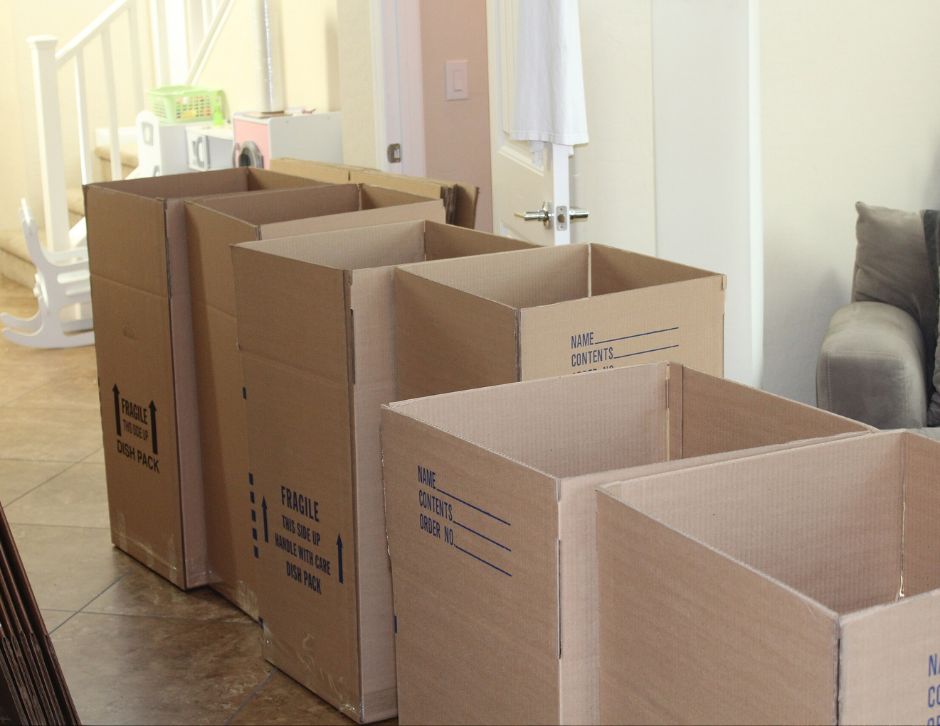
Featured Image: Moving Boxes; MoveON moving, CC BY-SA 4.0, via Wikimedia Commons.
Related Reads.


